Smriti
Your phone remembers your work. Point the camera, say one line, ask it anything later. Nothing leaves the device.
Who it's for
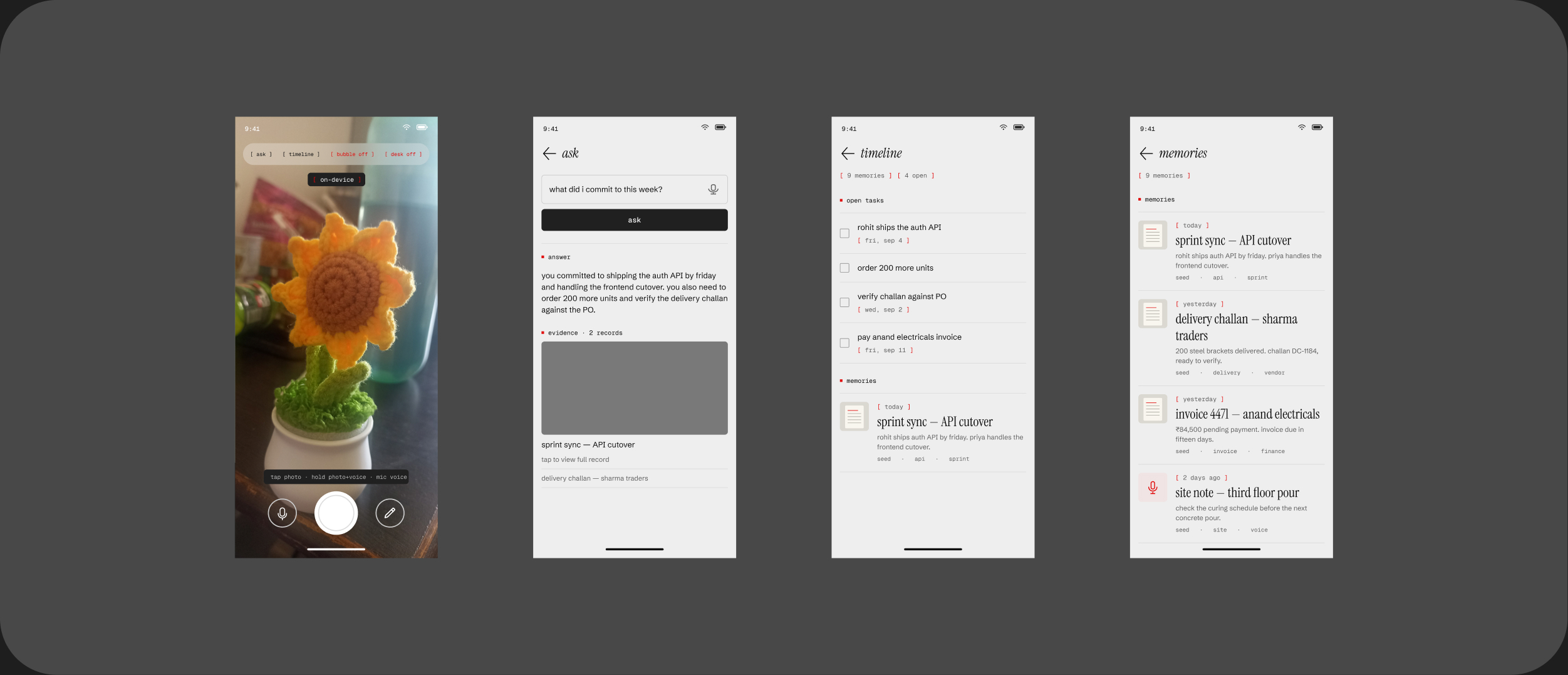
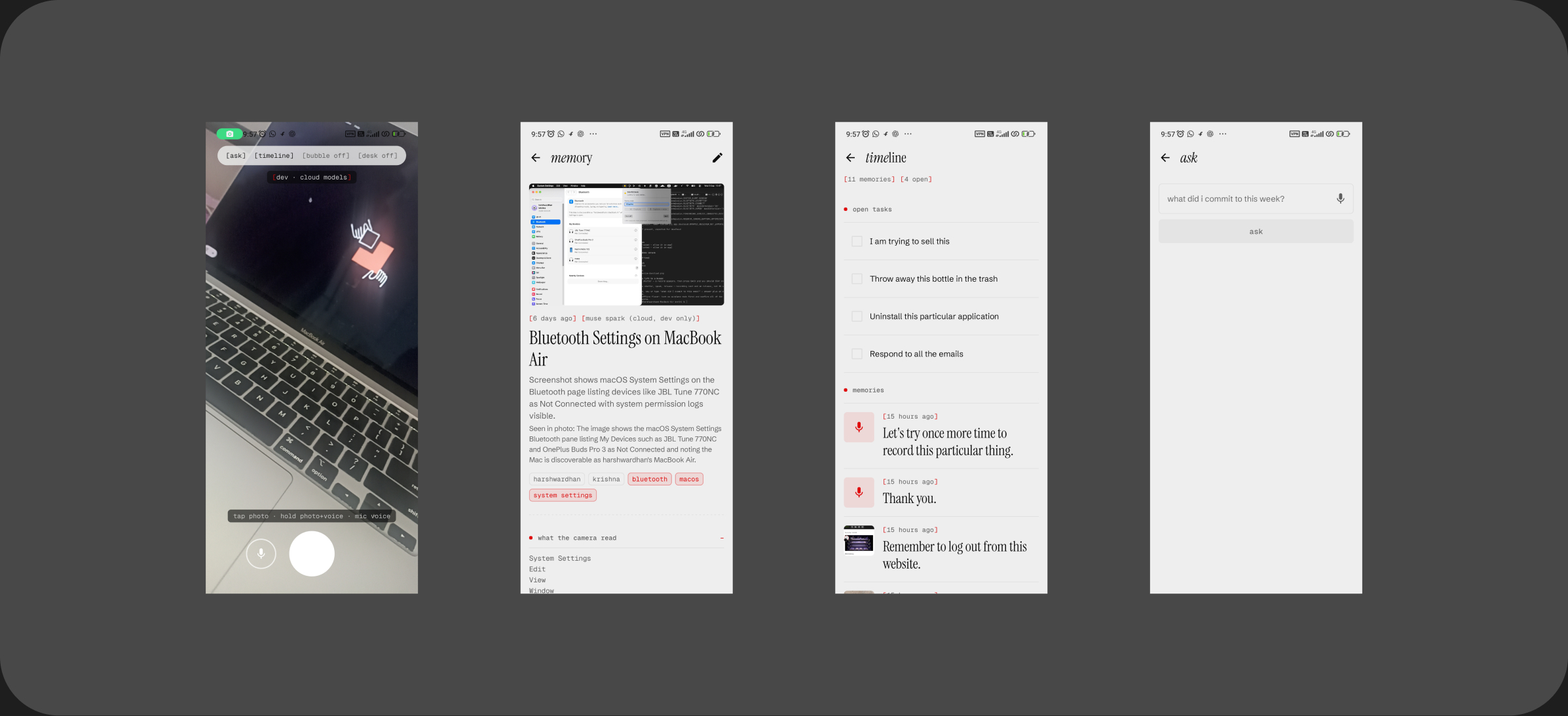
Site engineers, shop owners, lab technicians, field staff: people whose work doesn't happen at a desk and who will never type notes. Smriti lets them press once, capture the thing in front of them, say one line about it, and later ask out loud. The answer comes back with the original photo as evidence.
What we learned
- 01Real paper is bilingual
The Latin OCR model returns near-empty text on Devanagari. Smriti runs both recognisers and keeps whichever read more.
- 02A 1B model doesn't honour schemas
So the extractor never throws: it repairs braces, fences and trailing commas, aliases keys, retries once, then falls back to the raw transcript. Losing a capture is the worst failure.
- 03On-device speech can be missing entirely
On a stock Moto G05 the recogniser had no language pack. That made on-device Whisper a requirement for the offline build, not a stretch goal.
- 04GPUs crash in ways you can't catch
MediaPipe's GPU backend segfaults on Mali mid-generation. A sentinel quarantines the GPU after one unexplained death.
- 05Privacy has to be enforced, not promised
A telemetry library silently added INTERNET through the manifest merger. A build task now fails if the shipping manifest ever asks for network.
How it works
- Camera → on-device OCR (Latin + Devanagari).
- Mic → on-device speech recognition.
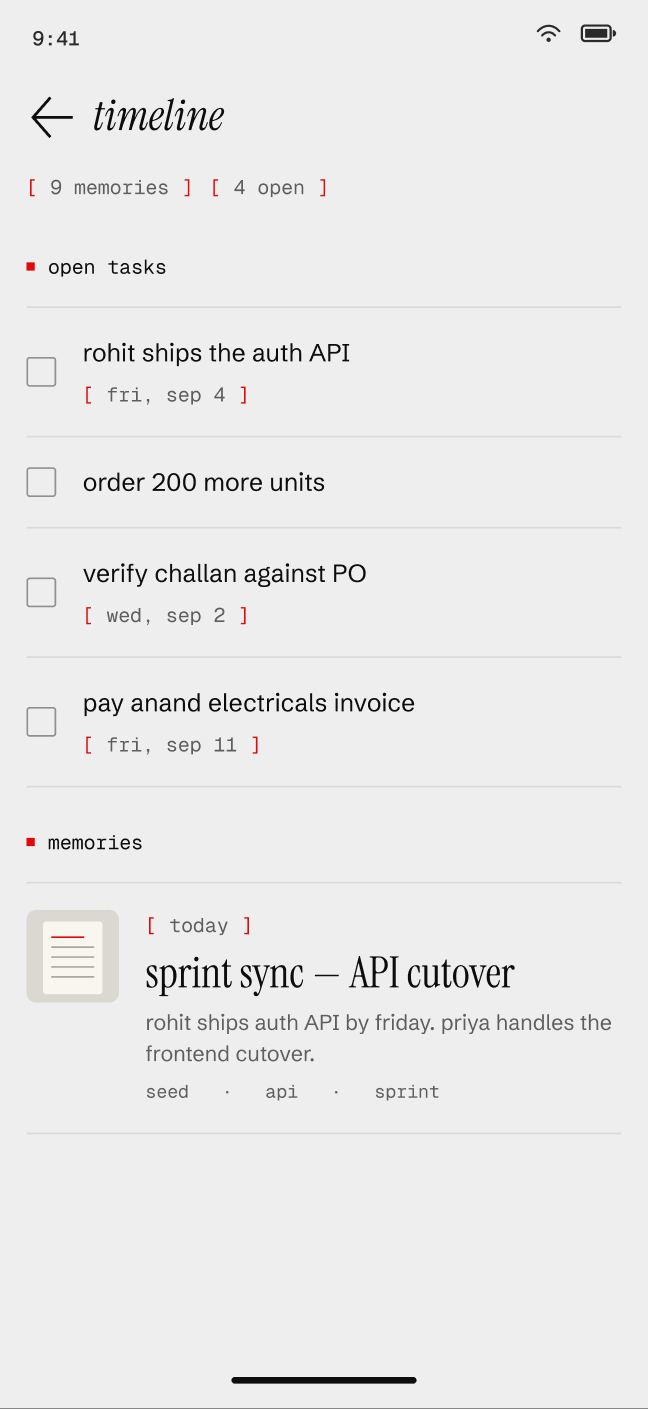
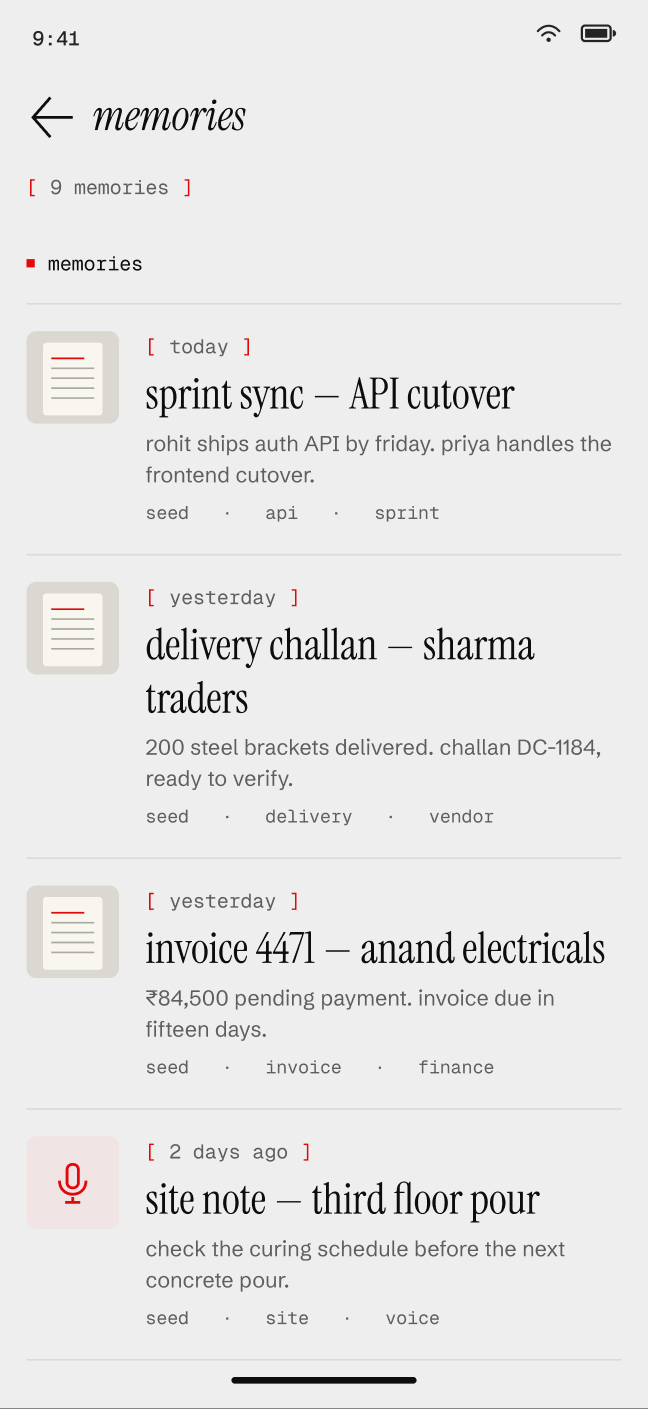
- A local language model fuses both into a structured record: title, people, tasks, dates.
- Questions are embedded and matched by cosine similarity. No vector database needed at this scale.
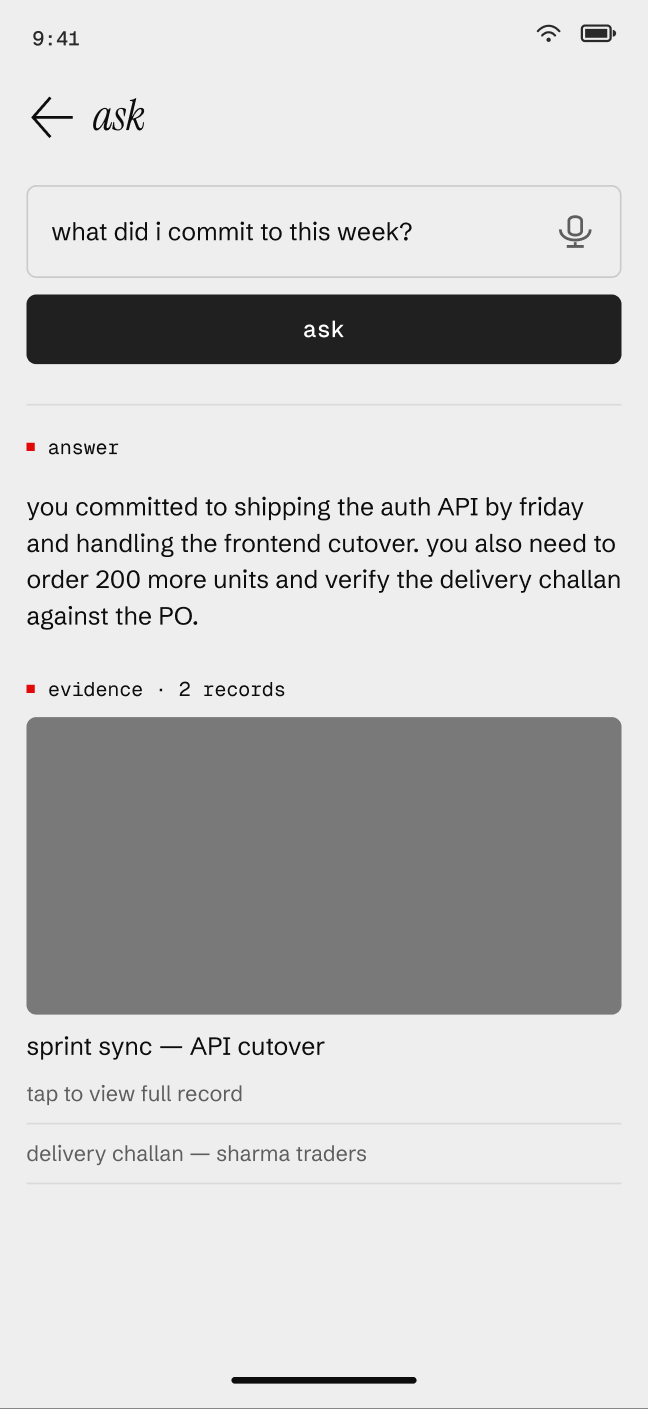
- Answers cite the records they came from, photo first.
Design decisions
- 01The camera is the home screen
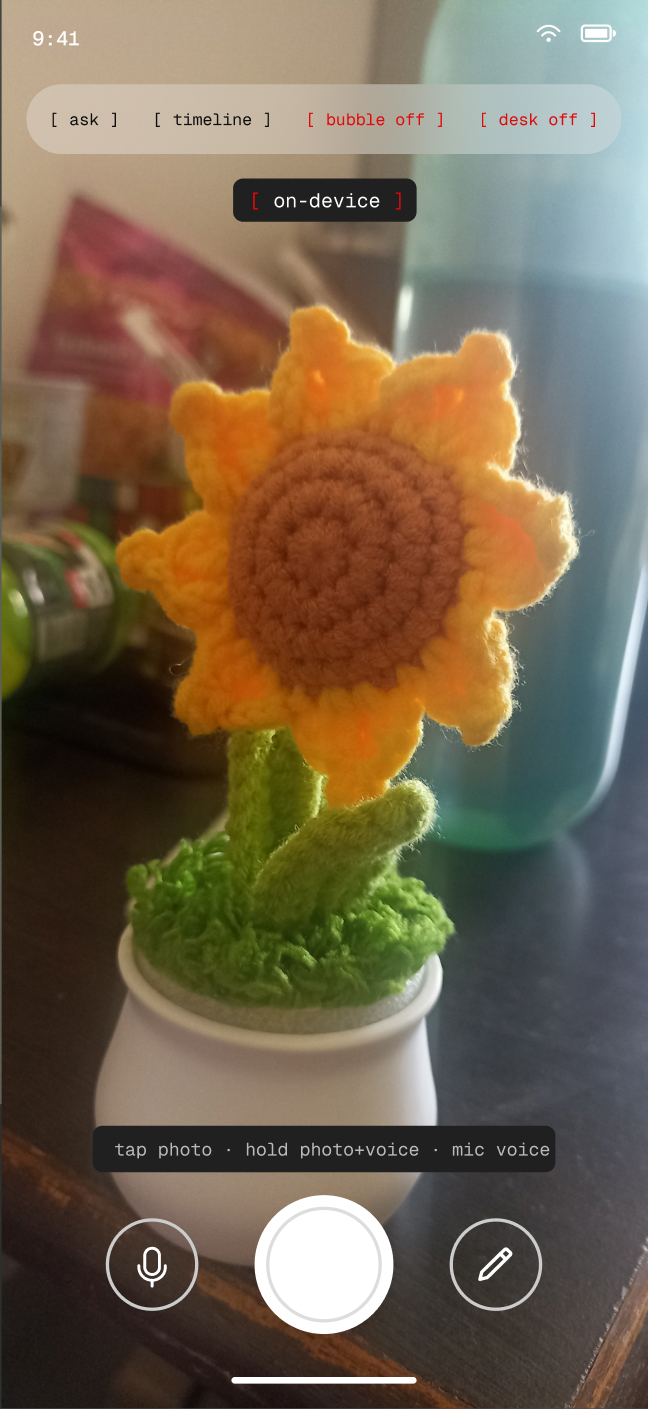
One shutter: tap for photo, hold for photo + voice, mic for voice only. No forms.
- 02Evidence before prose
Every answer shows the source record and its photo, because a 1B model has to show its working.
- 03Mono tags as status
[ on-device ], [ 9 memories ], [ fri, sep 4 ]: small bracketed tags carry state without adding chrome.
Design, up close
Crops from the Smriti Figma file, then the real app on a real phone.

Outcome
Selected as a finalist at the iQOO Hackathon 2026. The offline build ships with no network permission at all, and a build-time guard makes sure it stays that way.